Issue Tracker
Discover how our comprehensive Issue Tracker & Collaboration Platform transformed team productivity through unified workflows, real-time communication, and centralized issue management. Explore the journey from fragmented tools and delayed resolutions to streamlined collaboration, faster delivery cycles, and measurable operational efficiency gains.
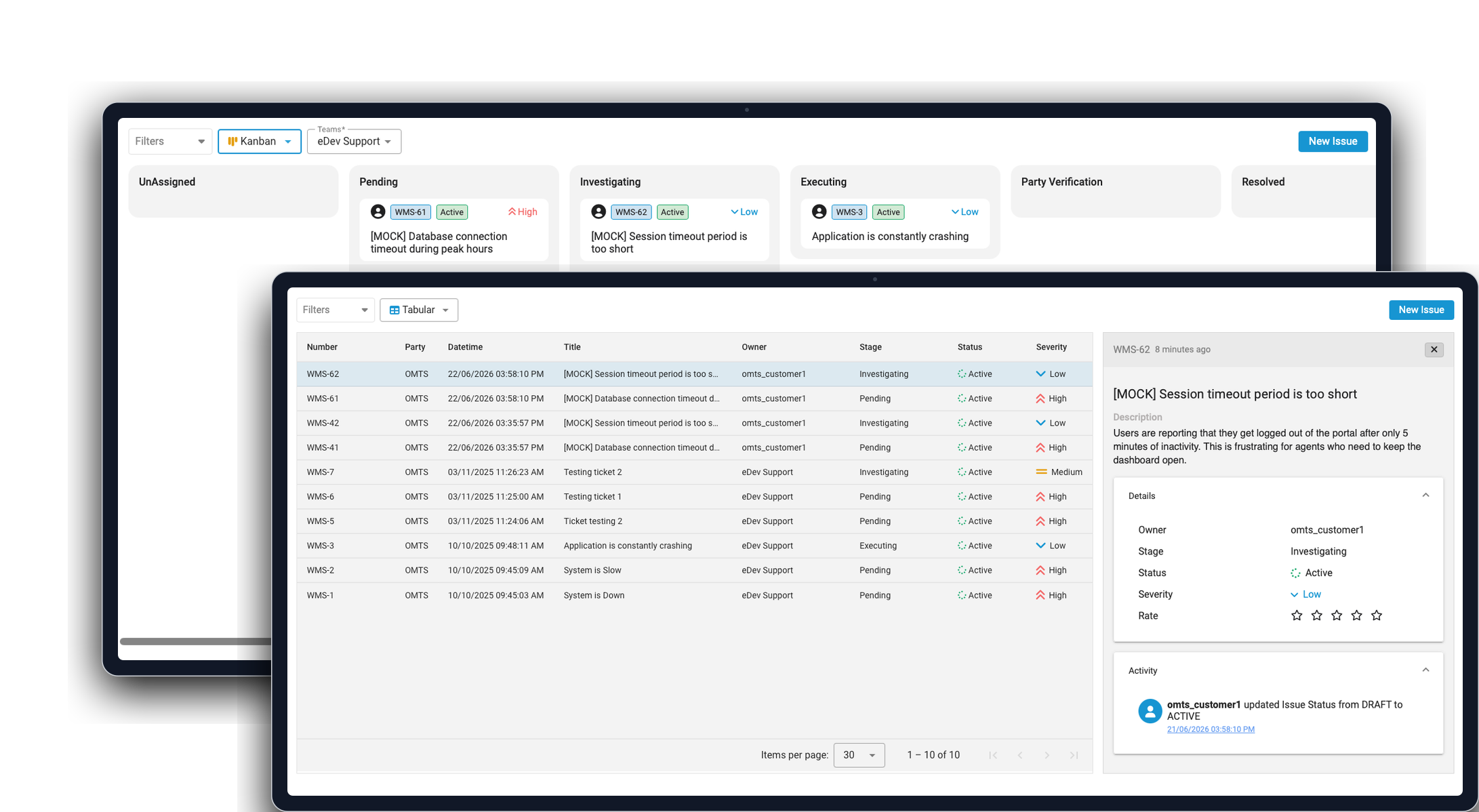
The challenge we faced.
A rapidly scaling SaaS company was losing critical information between their support team (who used a standalone ticketing system) and their engineering team (who used a rigid, isolated project management tool). Bugs were misreported, context was lost in third-party chat apps, and issue resolution times were soaring. As the organization grew, the lack of a unified workflow created constant friction between teams, making it difficult to track ownership, prioritize issues, and maintain consistent communication across departments.
At the same time, managers had no clear visibility into overall project health or team workload distribution. Reporting was fragmented across multiple tools, making it nearly impossible to measure performance accurately or identify bottlenecks in real time. This led to delayed releases, duplicated efforts, and increasing operational inefficiencies that directly impacted product delivery and customer satisfaction.
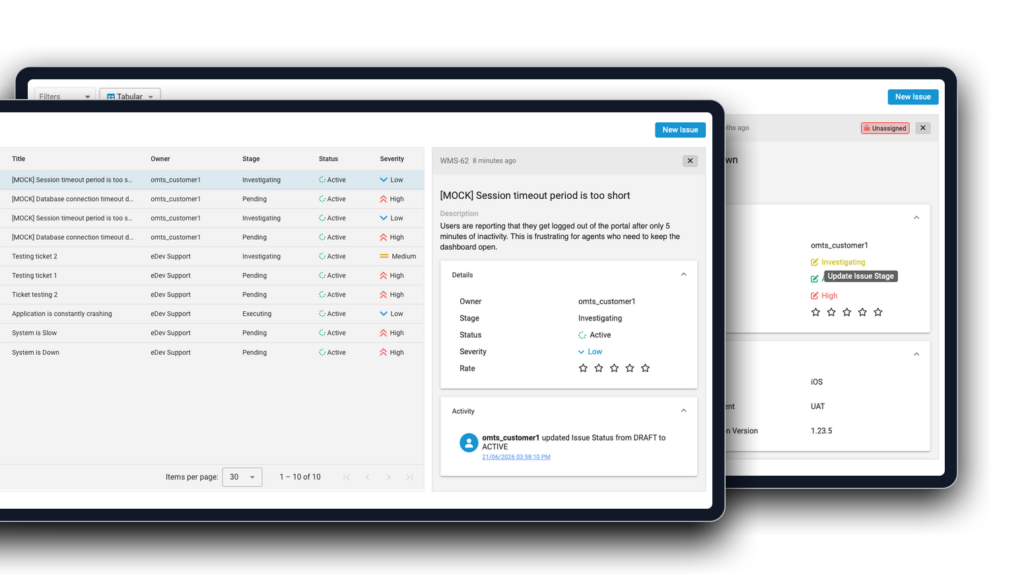
Step into the Solution
The project began with a close analysis of how engineering, QA, and support teams collaborated across multiple disconnected tools. Important conversations were scattered between chat applications, ticketing systems, and project boards, causing delays, duplicated work, and missing context. Our goal was to create a unified platform that connected project management, communication, and issue tracking into one streamlined workspace without disrupting existing team workflows.

Connecting Teams Around Every Issue
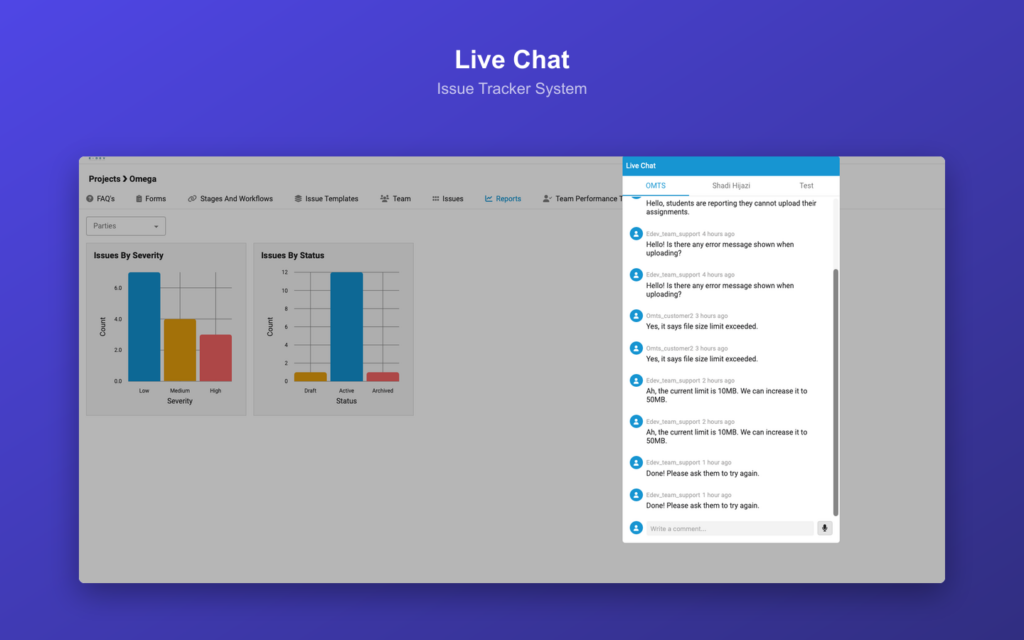
Rather than treating communication as a separate tool, we embedded collaboration directly into the development process. Live chat, private conversations, and issue-specific comments ensured every discussion remained attached to the relevant task, giving developers, testers, and support teams complete visibility into each issue from creation to resolution.
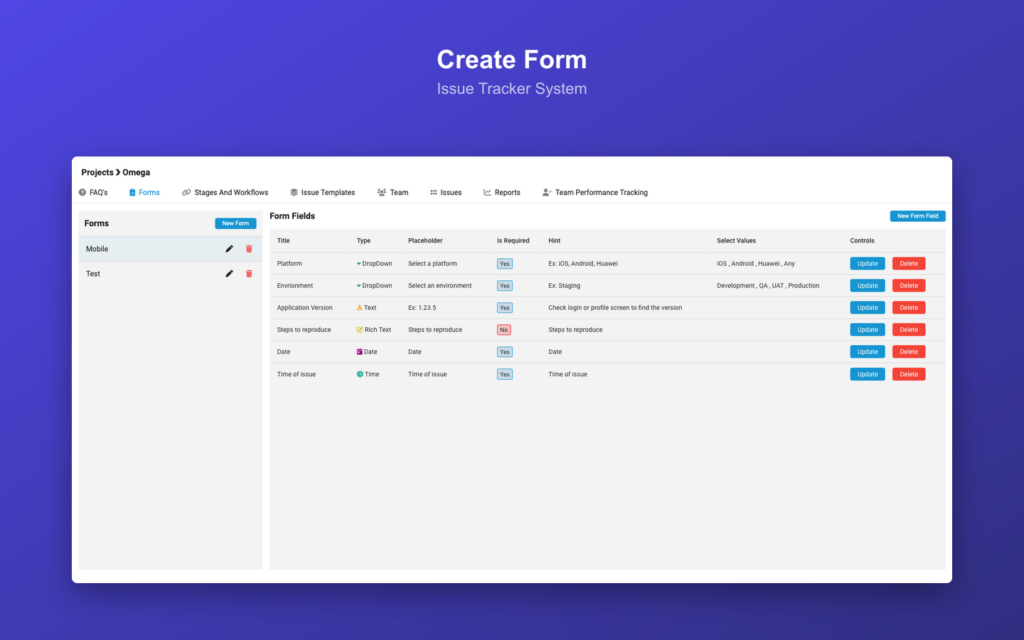
Custom workflows and standardized issue forms also simplified ticket escalation, allowing support requests to move seamlessly into engineering pipelines while preserving all customer context and technical details.

Building a Scalable Collaboration Platform
To support growing teams, the platform was designed around flexible workspaces, configurable projects, and customizable workflows. Organizations could create dedicated environments for multiple departments while maintaining a consistent process for tracking work, measuring progress, and managing team responsibilities.
Interactive Kanban boards, real-time notifications, and comprehensive reporting provided leadership with clear visibility into project health, team capacity, and delivery performance.
UX/UI Design & Prototype.
Once the platform requirements were established, we designed a modern, intuitive user experience that brought issue tracking, project management, and team collaboration into a single workspace. Interactive prototypes were created to validate Kanban boards, custom workflows, issue management, live chat, notifications, and reporting before development began, allowing stakeholders to refine workflows and user journeys early in the process. This collaborative design approach ensured the final platform was easy to navigate, minimized context switching, and provided a seamless experience for support, QA, engineering, and project management teams.
Dedicated product team, accelerated results.
The platform transformed the way teams handled bugs and requests by connecting support, QA, and engineering in one shared workspace. With complete issue history, direct communication, and clear ownership, teams reduced troubleshooting time and resolved problems faster with better context.
By replacing disconnected project management and communication tools with a single platform, the organization eliminated unnecessary tool switching and created a more organized workflow. Teams could manage tasks, discuss updates, and track progress without losing important information across different systems.
With interactive Kanban boards, custom workflows, and real-time reporting, managers gained better visibility into workloads and project progress. Teams became more efficient, improved delivery speed, and were able to focus more on building valuable features instead of managing processes.
The Collaboration Platform We Delivered .
The final solution was a unified Issue Tracker platform built to bring project management, communication, and workflow automation into one connected environment. Instead of relying on separate tools for tickets, conversations, and team coordination, the platform provided a centralized workspace where teams could manage tasks, resolve issues, and collaborate in real time.
Product 1: Agile Project Management.
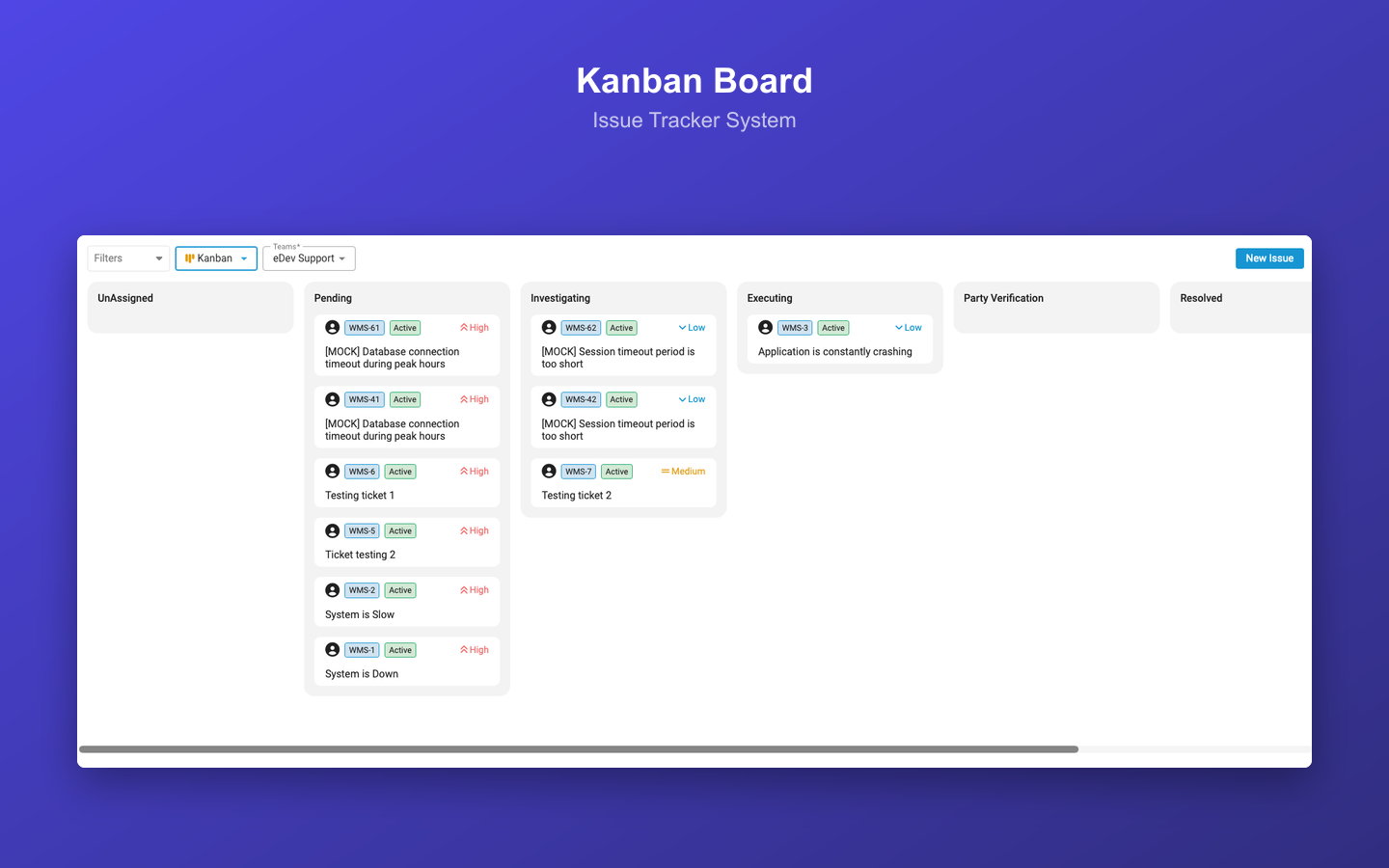
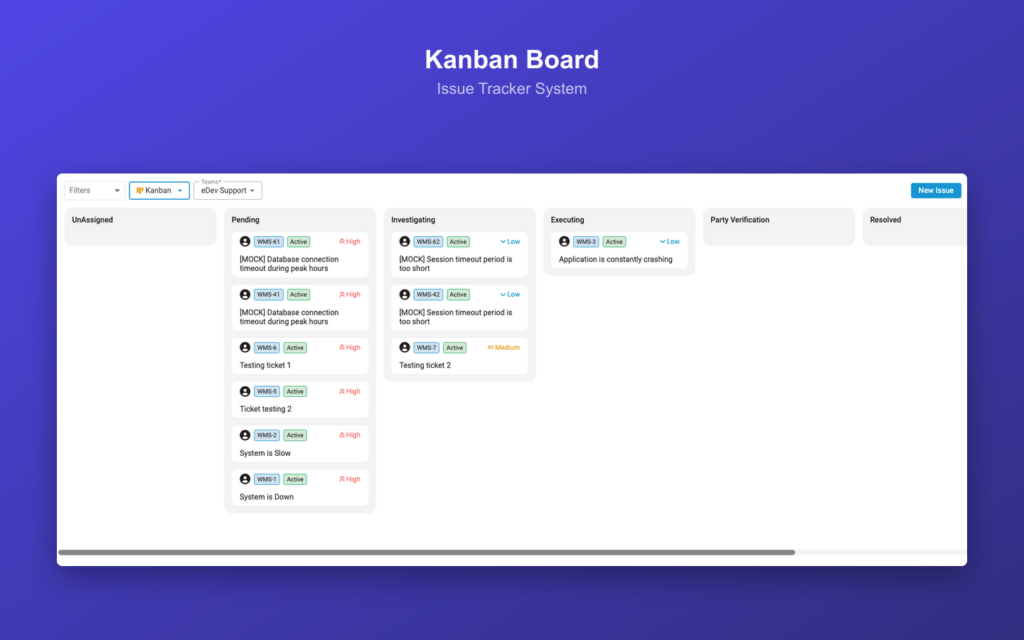
The platform provides a visual workspace where teams can organize, prioritize, and track work from planning to completion. Interactive Kanban boards allow projects to move smoothly through every stage while giving managers and team members real-time visibility into progress, priorities, and upcoming tasks.
Features:
- Interactive Kanban boards
- Issue creation and task tracking
- Real-time workflow visualization
Product 2: Connected Team Collaboration.
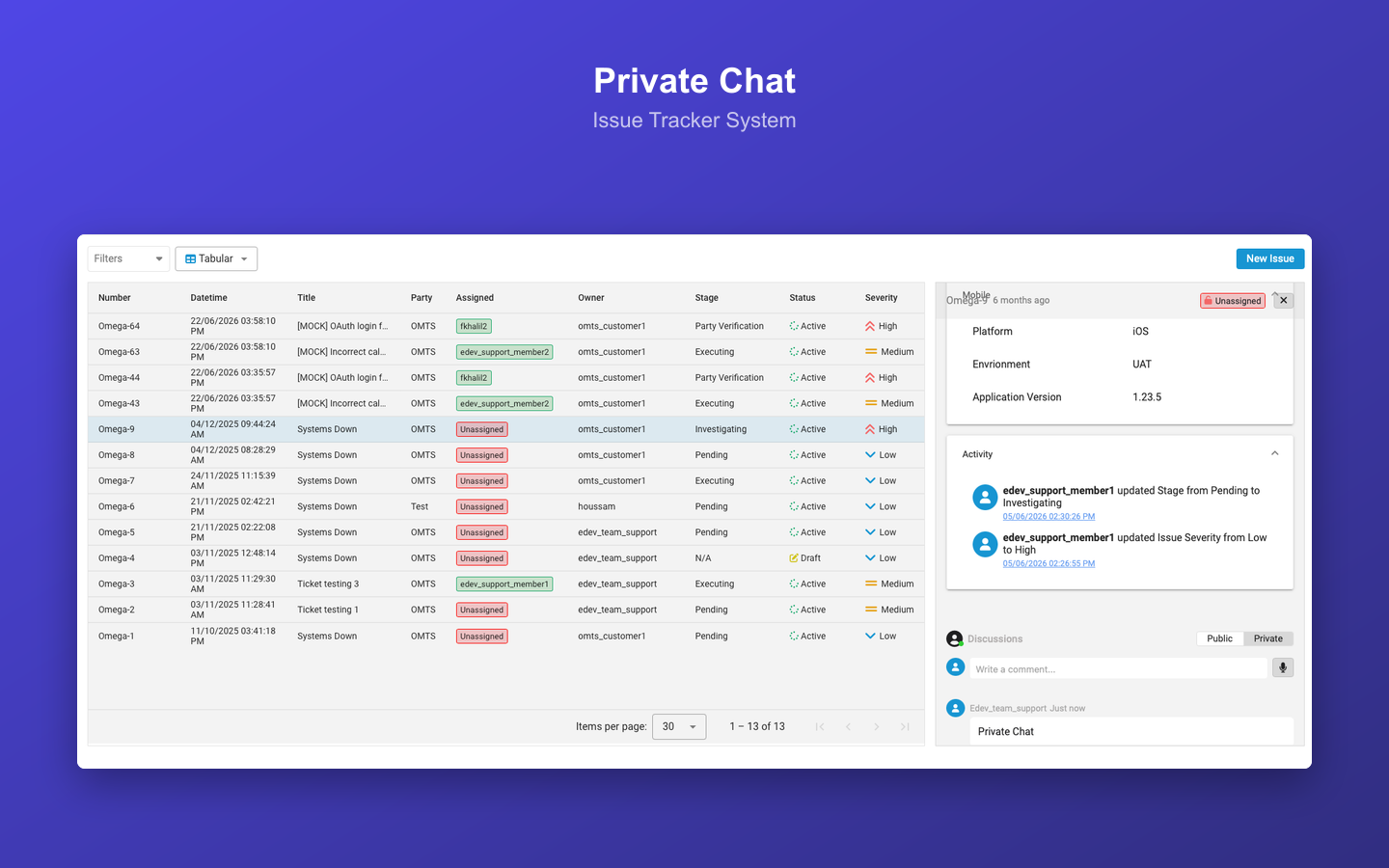
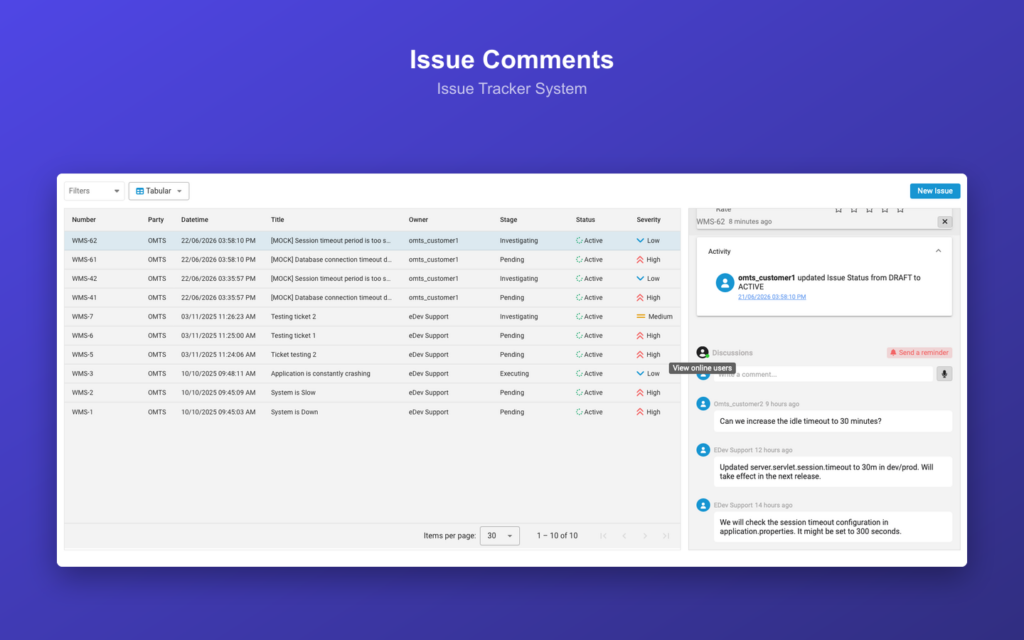
Communication is built directly into every issue, allowing developers, QA engineers, and support teams to collaborate without switching between multiple applications. Live chat, private messaging, and issue-specific comments preserve the full conversation history, ensuring every decision and update remains connected to the work itself.
Features:
- Live chat and private messaging
- Issue-level discussions and comments
- Centralized communication for every task
Product 3: Reporting & Workflow Intelligence.
The platform equips project managers with powerful reporting and workflow analytics to monitor team performance, identify bottlenecks, and improve delivery speed. Real-time notifications and customizable reports provide complete visibility into project health, helping organizations make informed decisions and keep projects on schedule.
Features:
- Project analytics and reporting
- Smart notifications and alerts
- Team performance and workload insights
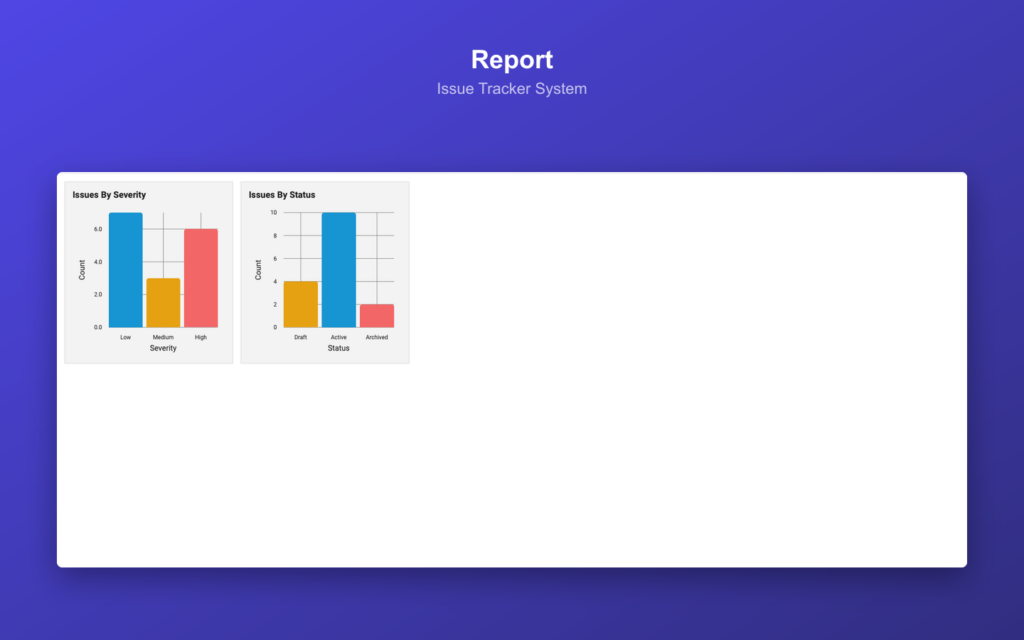

The completed Issue Tracker platform became a single source of truth for engineering, QA, and support teams, connecting project management with real-time collaboration.
Integrated workflows, contextual communication, and actionable reporting enabled teams to resolve issues faster while maintaining complete visibility across every project.